

Gramophone: Sarah Kirkland Snider “Forward Into Light” Review

ALBUM REVIEW
February 22, 2026
Pwyll ap Siôn from Gramophone reviewed Sarah Kirkland Snider’s new studio album, Forward Into Light, on Nonesuch Records/New Amsterdam Records. Read more »
“In the booklet notes accompanying this album, composer Sarah Kirkland Snider observes that the orchestral medium’s expansive palette has enabled composers to explore remote psychological interiors and discursive narrative journeys. This certainly appears to be true in Snider’s case, as evidenced by all four orchestral works contained on the album. It marks a departure from previous releases by Snider – such as the gothically patinated sound worlds of song-cycles such as Penelope and Unremembered – in presenting a broader survey of the composer’s works spanning almost a decade, with the opening two compositions offering her music in arguably its strongest and most distinctive light.
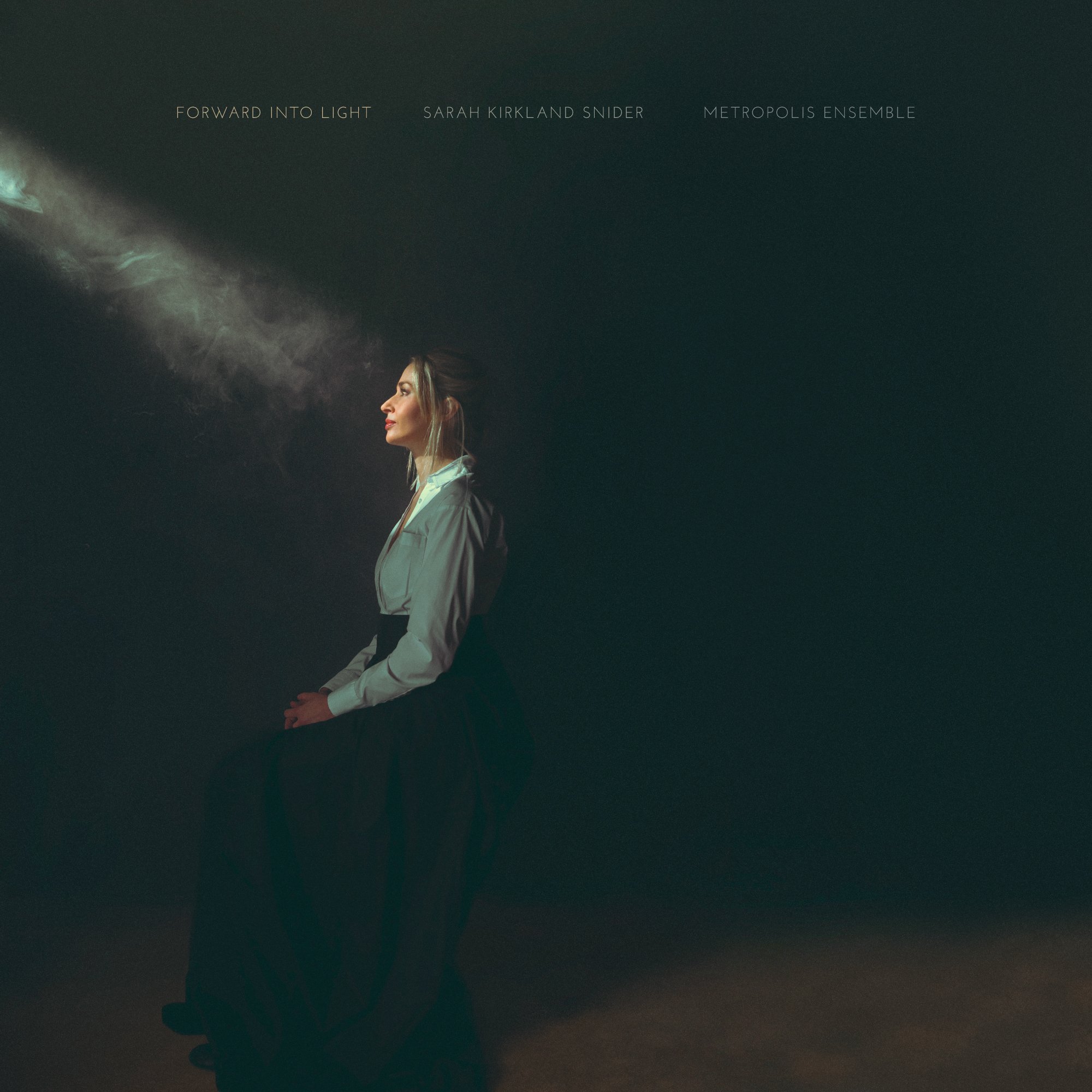
Inspired by the efforts of Elizabeth Cady Stanton, Susan B Anthony, Frances EW Harper and Mabel Ping-Hua Lee within the women’s suffrage movement in the United States (alongside many others), the opening work, Forward Into Light, teems with creative ideas. An arresting introduction reverberates with a shimmering gesture on harp and chiming percussion, underpinned by a falling melody in disjunct motion first heard in the string section. These two distinctive ideas punctuate the work’s mosaic-like structure before eventually revealing their connection to Ethel Smyth’s 1910 suffrage anthem March of the Women (from which the work takes its title). Imaginatively and dynamically orchestrated – with clear nods towards Debussy and Ravel – the piece’s depth and substance belie its concise 14-minute timespan.
A similarly searching, questing spirit belongs to Drink the Wild Ayre, heard here in a version for harp and string orchestra, where interlocking variations yield a rich sonic palimpsest of layers stacked in ever-increasing intensities. Harpist Noël Wan is in sparkling form throughout. Interlocking sections and movements also shape the eight-part suite Eye of Mnemosyne, which abounds in dramatic, filmic chiaroscuro effects, while the earliest piece on the album, Something for the Dark, explores similar themes of resilience and hope found in Forward Into Light.
All four works are performed with clarity, focus and precision by the Metropolis Ensemble under the direction of Andrew Cyr, whose orchestra has for over a decade established itself as one of the leading purveyors of the so-called neo-minimalist, post-tonal, indie classical style sometimes associated with Snider, Timo Andres, William Brittelle and others. Recommended.”