

when scientists and musicians collide
A salon series in partnership with Sound and Science
Hosted by Stephon Alexander and Andrew Cyr
Salon No. 1 — Stephon Alexander, with Christine Wu, violin and viola
Sunday, December 13 · 4:00 PM
1 Rivington Street, 2nd floor (buzzer 1), New York, NY
Pay what you wish · $50 suggested
Wine tasting sponsored by Miro Cellars
Theoretical physicist and jazz musician Stephon Alexander opens Quantum Entanglements with his book in progress on the cosmos and the creative process. Violinist-violist Christine Wu plays music by Kaija Saariaho, Caroline Shaw and Jessie Montgomery. Live music, conversation and a wine tasting from Miro Cellars.
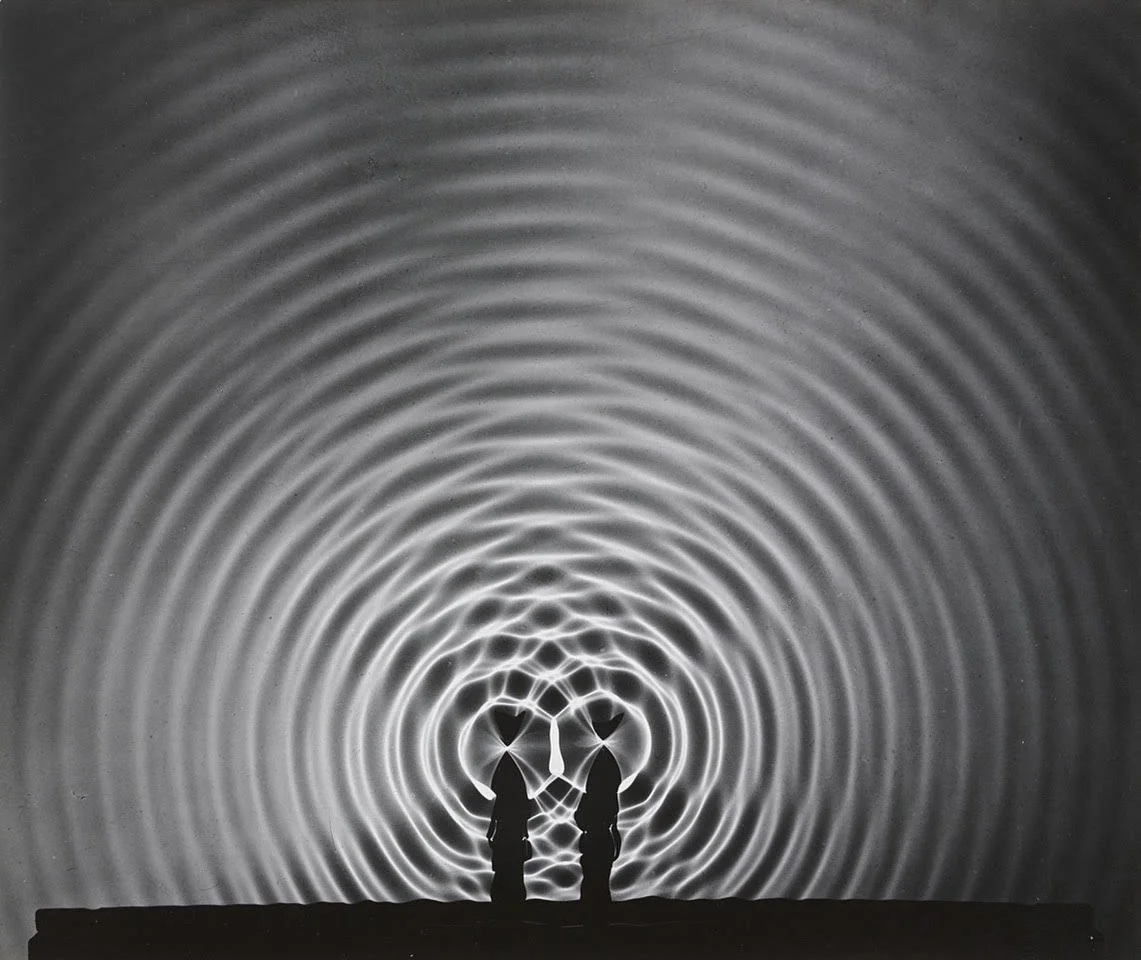
Quantum Entanglements is a new salon series from Metropolis, presented in partnership with Sound and Science. Hosts Stephon Alexander and Andrew Cyr pair a scientist with musicians for an afternoon of ideas, live sound and conversation.
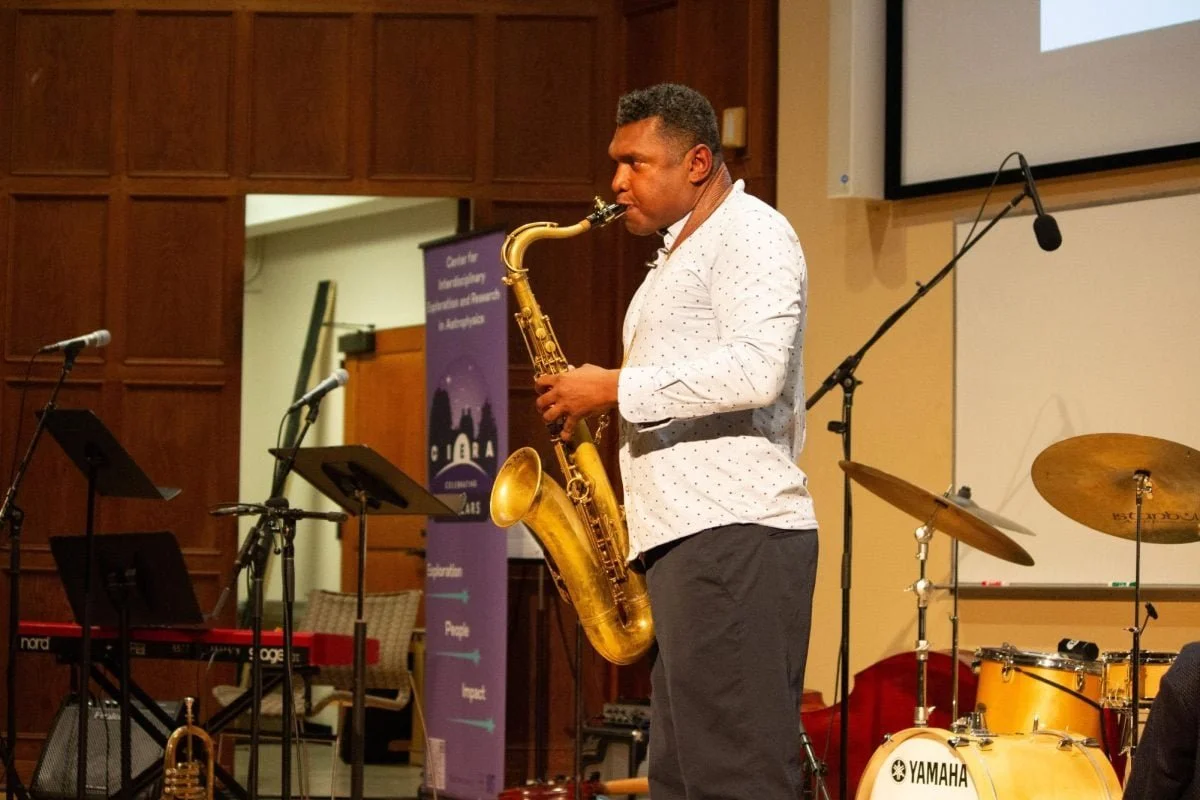
Stephon Alexander, theoretical physicist, jazz saxophonist and founder of Sound and Science, opens the series. He directs the Center for Theoretical Physics and Innovation at Brown University. He trained at Haverford and Brown and did postdoctoral work at Imperial College London and Stanford. He is a Fellow of the American Physical Society and the author of the bestselling Fear of a Black Universe and The Jazz of Physics, which grew partly out of his conversations about music and the cosmos with Ornette Coleman, Yusef Lateef and Brian Eno. For this first salon he offers an early look at the book he’s writing now, about the cosmos itself and the creative process.
Woven through the talk, violinist and violist Christine Wu plays solo works by Kaija Saariaho, Caroline Shaw and Jessie Montgomery. Wu won an Audience Prize at the 8th Sendai International Music Competition and the CD Recording Prize at the inaugural Berlin Prize for Young Artists. She is a longtime Metropolis collaborator.
The afternoon ends with an informal hang and a wine tasting sponsored by Miro Cellars.

Sound and Science is a free, mentor-driven after-school program for New York City high school students. It teaches STEM concepts through music production and pairs teens with college STEM majors as peer mentors. It was founded by Stephon Alexander and is supported by the Simons Foundation.

Metropolis is a GRAMMY-nominated home for new music and the artists who make it. Its 2026 album Forward into Light, with composer Sarah Kirkland Snider, earned three GRAMMY nominations, and Canto Ostinato with Erik Hall was named one of NPR’s best albums of the year. Now in its 20th year, Metropolis has commissioned more than 450 works and championed artists early, including Caroline Shaw, Timo Andres and Vivian Fung. It has performed at the Hollywood Bowl, Lincoln Center, the Kennedy Center, BAM and The Tonight Show, and has recorded for Nonesuch with artists from Snider to The Roots. Beyond the stage, Metropolis brings free music to the city through Biophony Pop-Up NYC and its solstice concerts at Brooklyn Botanic Garden. Since summer 2026, Sound and Science has been in residence at Metropolis’s Rivington space in a unique nonprofit-to-nonprofit partnership, hosting two classes a week. Quantum Entanglements is the public face of that partnership: two organizations sharing a room, and the idea that curiosity, in science or music, grows best in company.
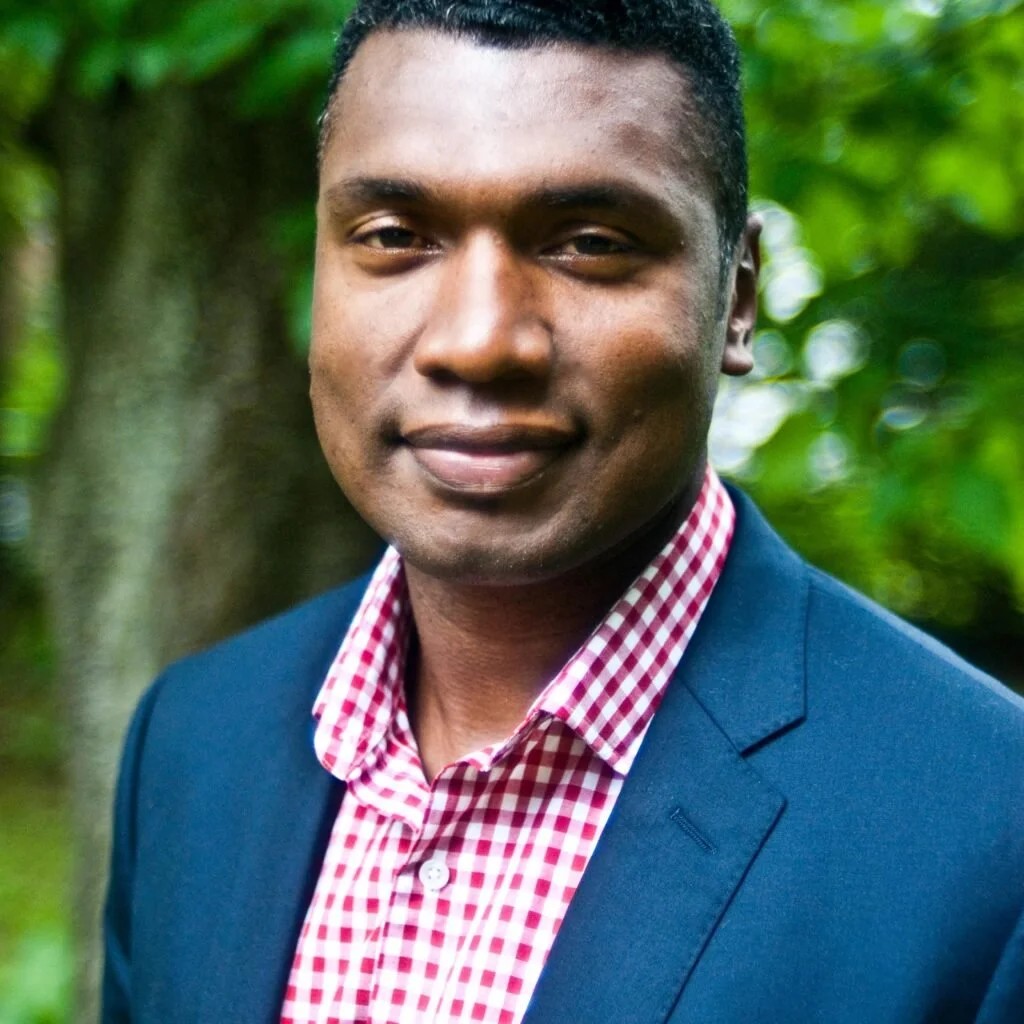
Stephon Alexander is a theoretical and computational physicist, author and Jazz musician, whose work is at the interface between cosmology, particle physics, AI, quantum gravity and music technology. His expertise lays in constructing new theories of the early universe and elementary particle physics that have predictions for the universe at present, such as dark energy, dark matter, and the large-scale structure of the universe. He also combines mathematics and tools from theoretical physics into the geometry and cognition of musical perception, signal processing, and computational algorithms.
Alexander is a Professor of Physics at Brown University and a past President of the National Society of Black Physicists. Alexander was also the Executive Director of the Harlem Gallery of Science and is currently the Founder and CEO of Sound+Science- an afterschool program for public school juniors in NYC. He had previous appointments at Stanford University, Imperial College, Penn State, Dartmouth College, and Haverford College. Alexander is a specialist in the field of string theory and cosmology, where the physics of superstrings are applied to address longstanding questions in cosmology. In 2001, he co-invented the model of cosmic inflation based on string theory.
In his critically acclaimed book, The Jazz of Physics, Alexander revisits the ancient interconnection between music, astrophysics and the laws of motion. He explores new ways music mirrors modern physics and discusses innovations in physics that have been and can be inspired from "improvisational logic" exemplified in Jazz performance and practice.
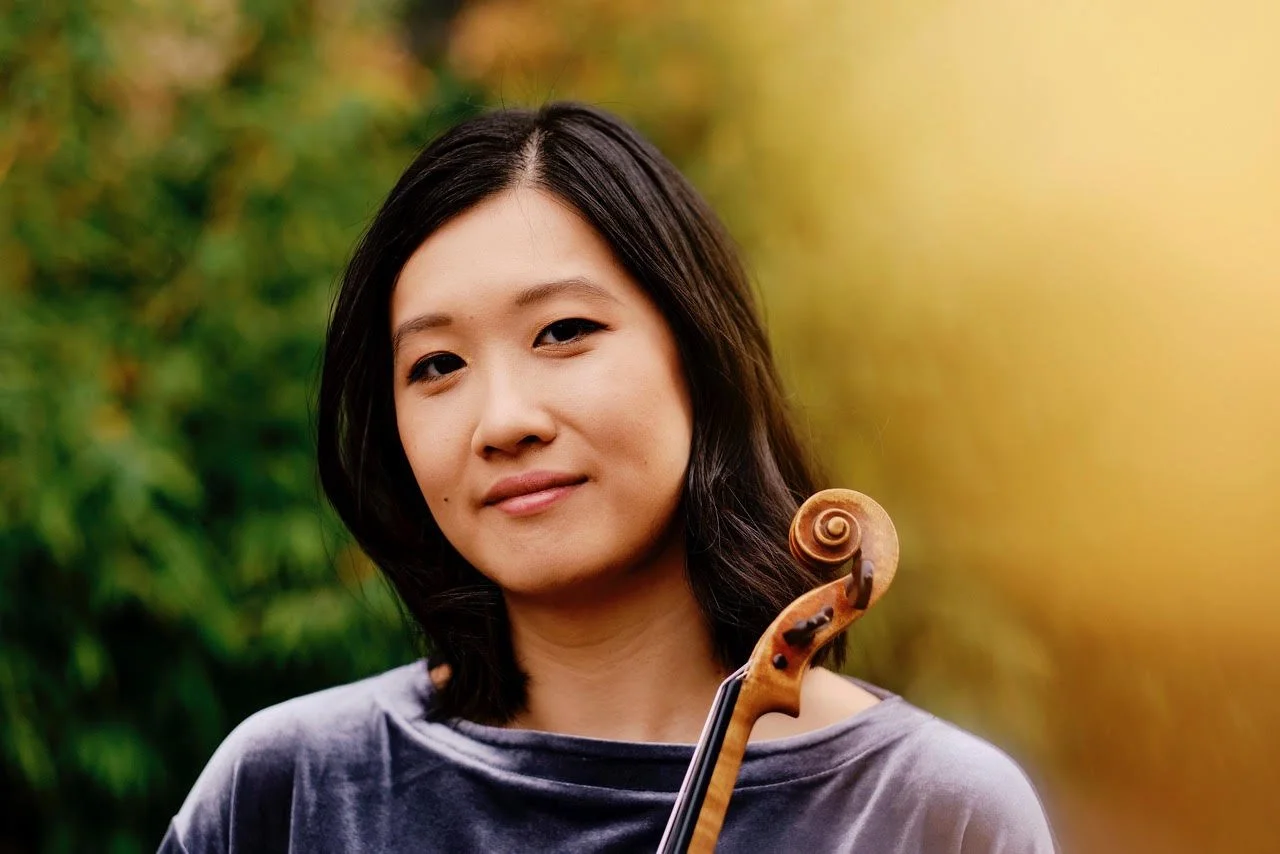
Violinist and violist Christine Wu “delivers a distinctly personal statement” (Fonoforum) in her latest solo album, Recollection(s), released by Outhere Music’s Channel Classics, featuring works for violin and viola spanning from J. S. Bach to Joan Tower. Wu’s collaborative work includes performances with St. Paul Chamber Orchestra, East Coast Chamber Orchestra, Savannah Music Festival, and Grace Note Farm Music Festival, and has appeared as guest principal second violin with the Barcelona Symphony Orchestra (OBC) and guest second concertmaster with Bochum Symphoniker. She is also the recipient of the Audience Prize at the 8th Sendai International Music Competition and has been shortlisted in the Premio Paganini, Dallas, Singapore, and Indianapolis international violin competitions.
Wu studied at the Cleveland Institute of Music, The Juilliard School, and Manhattan School of Music with Jaime Laredo, Sylvia Rosenberg, Masao Kawasaki, and Nicholas Mann, and has participated in programs in Gstaad, Savonlinna, and Prussia Cove IMS, working with Ana Chumachenco, Mark Gothoni, and Thomas Riebl. She also holds a minor in Business Management from Case Western Reserve University.
