

Amrose Akinmusire
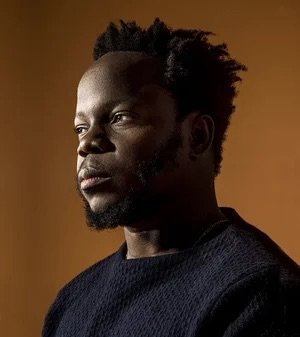
Ambrose Akinmusire is at the centre reaching out. An artist in the truest sense of the word, Akinmusire has spent the last 20 years connecting worlds, bringing diverse influences and an intuitive flair for innovation to his work, whether garnering four Grammy nominations, releasing albums on labels like Blue Note and Nonesuch, collaborating with choreographers and filmmakers, or as an educator in his position as Director of Jazz at Stanford University. Widely acclaimed and impossible to pin down, Akinmusire is shaping the cultural conversation beyond music as one of the most urgent creative voices in contemporary America.
Akinmusire’s path was always going to be unique. Born into a church-going family, he played gospel music from a young age, learned his chops on piano and drums before adopting the trumpet as his instrument of choice. Growing up with a hip-hop soundtrack in ‘90s Oakland, California, Akinmusire gravitated towards jazz and was exposed to the full spectrum of the form, seeing Art Ensemble of Chicago perform one week and Ellis Marsalis the next. Inspired by the way in which Roy Hargrove transcended genre, he was picked up by Steve Coleman, dipping out of school at 19 to play with jazz greats like Joe Henderson and Billy Higgins and developing a sound of rare clarity that garnered praise from across the country.
Propelled into the wider public consciousness, Akinmusire has gone on to pick up a succession of prestigious international awards - such as Le Grand Prix de l’Académie du Jazz in France, Germany’s ECHO jazz award and the Paul Acket Award from The Netherlands - and voted best trumpet player in the DownBeat Critics Poll 11 times in the last 14 years. He has received grants, commissions and prizes from Doris Duke Foundation, the MAP Fund, Kennedy Center, Berlin Jazz Festival and Monterey Jazz Festival. In 2026, he was awarded the Chanel Next Prize in recognition of the broader impact of his practice.
And yet, although a prodigious talent in the formal sense, it was the mentors who taught him of the social, political, and emotional context to the music who moved Akinmusire most. Can you play in a way that will make someone dance? Can you play in a way that will make someone cry? “I’m looking for what bypasses logic, what bypasses my brain and goes straight to my heart” he says. “Because intuition for me is the highest form of intellect.”